A few years ago, most people treated AI-generated video as a technical demo. It was interesting, occasionally strange, and rarely part of a normal publishing workflow. That has changed. What stands out now is not just that AI video exists, but how quickly image-based tools have become part of everyday creative experimentation.
One of the clearest examples is face swap. The format is no longer confined to novelty edits. It now sits inside a wider movement toward personalised, lightweight, visually expressive content that starts with a still image and ends as something far more dynamic.
Why Motion-First Content Keeps Expanding
Digital content has become more competitive, though not necessarily more patient. Static visuals still matter, especially for design systems, product pages, and brand identity. Yet in social distribution, motion carries a different kind of advantage. It creates presence.
That does not always require a full video production process. In many cases, creators and brands already have the image they need. What they want is momentum, atmosphere, or a stronger visual hook. AI image-based video tools answer that need by lowering the distance between still media and moving media.
This is one reason the space has grown so quickly. The starting point feels familiar. Users do not need a studio setup, advanced editing skills, or a large media team. They often need only a usable image and a clear idea of what kind of energy they want the final result to carry.
How Face Swap Helped Normalise Personalised AI Media
Face swap played an important role in this shift because it taught users something broader than its own function. It showed that identity could become part of a dynamic media workflow.
That matters more than it might seem. Once people began seeing themselves, friends, creators, mascots, or characters inserted into moving formats more easily, expectations changed. AI media stopped feeling like a generic output and started feeling more personal, more social, and more adaptable.
For brands, that opens up interesting territory. Personalisation has always been valuable, but it usually came with production cost. Now there are more ways to experiment with identity-led visuals without building every asset from scratch.
Why AI Dance From Photo Feels Like the Next Natural Step
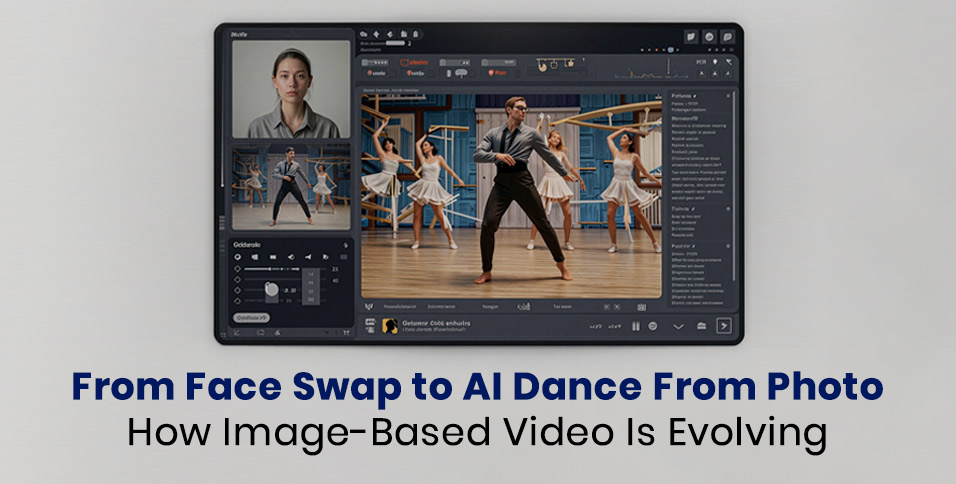
The next layer in that evolution is not hard to understand. If a still image can support identity-based transformation, it can also support performance-based transformation. That is where AI dance generator from photo enters the picture.
The appeal is straightforward. A single image becomes a moving, more expressive piece of media. That makes the format attractive to individual users, creators, community managers, and campaign teams alike. It lowers production friction while raising the entertainment value of the result.
There is also a cultural reason this category keeps growing. Dance is already native to internet video. It holds onto rhythm, familiar movement patterns, and social cues people instantly recognize. When those qualities are combined with photo-based generation, the output becomes easier to share and easier to integrate into a broad range of online contexts.
Where These Formats Make Sense Beyond Novelty
The strongest use cases are not always the loudest ones. While AI dance and face swap clips can absolutely support trend-driven social posts, they also work in more structured settings.
A creator can turn a static character image into a recurring content theme. A brand can energise a seasonal campaign without commissioning a full shoot. A community team can use playful visual content to revive engagement during slower cycles. An e-commerce business can experiment with personality-led social assets that feel less formal than standard product promos.
What makes these cases work is not the technology by itself. It is the match between format and intention. The more clearly a team understands why it is using an AI-generated video format, the more coherent the result tends to feel.
What Improves Quality in Practice
As more people use these tools, the standard for acceptable output rises. Viewers are still curious, though they are no longer impressed by the fact of AI alone. The result has to feel deliberate.
That usually comes down to a few practical choices:
- use a clean, well-framed source image
- keep the visual idea simple enough to read quickly
- match movement style to the subject
- avoid forcing a playful format into a serious brand context
- publish where experimentation is welcome rather than awkward
In other words, success is less about technical possibility than editorial judgement.
The Bigger Shift Behind the Trend
Image-based AI video is evolving because it solves a real creative problem. It gives users a bridge between what they already have and what modern digital publishing increasingly rewards.
That bridge is valuable. It shortens production distance. It expands the life of existing assets. It makes dynamic content more accessible to people who are not full-time editors or filmmakers. Most of all, it changes the role of the still image. Instead of being the final asset, it becomes the beginning of a more flexible media workflow.
That is why this category keeps moving forward. It is not surviving on novelty alone. It is finding a place inside the day-to-day logic of how online content is now made, tested, and shared.
Our Magazines →